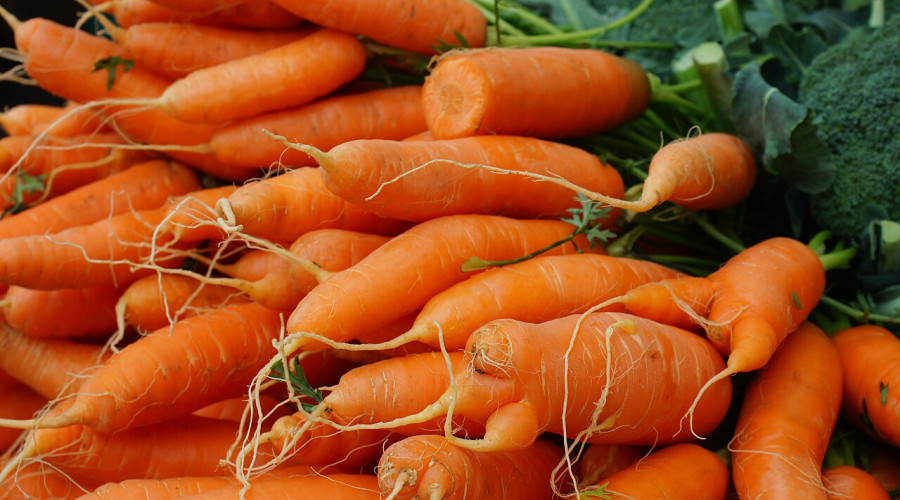
Carrots, known in Bangladesh as gajor, are widely available in winter markets and are eaten raw in salads, cooked in curries and pulao, and made into halwa. They are best known as a source of beta-carotene, the orange pigment the body can turn into vitamin A.
Key nutrients per 100 g
According to the US Department of Agriculture's FoodData Central (SR Legacy entry "Carrots, raw", FDC ID 170393), 100 g of raw carrot contains:
Energy: 41 kcal
Water: 88.3 g
Protein: 0.93 g
Total fat: 0.24 g
Carbohydrate: 9.58 g
Dietary fibre: 2.8 g
Total sugars: 4.74 g
Vitamin A: 835 µg RAE (retinol activity equivalents)
Beta-carotene: 8,280 µg
Alpha-carotene: 3,480 µg
Vitamin K: 13.2 µg
Vitamin C: 5.9 mg
Folate: 19 µg
Vitamin B6: 0.138 mg
Potassium: 320 mg
Calcium: 33 mg
Magnesium: 12 mg
Phosphorus: 35 mg
Iron: 0.3 mg
Sodium: 69 mg
What the evidence says
The standout nutrient is vitamin A. The US National Institutes of Health (NIH) Office of Dietary Supplements says vitamin A is important for normal vision, the immune system, reproduction, and growth and development. Carotenoids such as beta-carotene are pigments that give yellow, orange and red fruits and vegetables their colour, and the body converts some of them into vitamin A. The NIH lists carrots among foods that provide it, along with spinach, sweet potatoes, broccoli, mango and other fruits and vegetables.
The NIH's recommended daily amount is 900 µg RAE for adult men and 700 µg RAE for adult women. A 100 g portion of raw carrot, at 835 µg RAE, therefore provides roughly 93 percent of a man's daily recommendation and about 119 percent of a woman's, according to our calculation from the USDA and NIH figures.
Vitamin A deficiency is rare in the United States but common in many developing countries, especially among young children, the NIH says. The most common sign is an eye condition called xerophthalmia, an inability to see in low light that can lead to blindness if untreated. Doctors can check vitamin A status where deficiency is suspected.
The NIH also notes that people who eat a lot of foods containing vitamin A or beta-carotene might have a lower risk of certain cancers, but that studies do not show supplements prevent cancer. In some studies, high-dose beta-carotene supplements increased the risk of lung cancer and death in people who smoke or used to smoke.
Fitting carrots into a healthy diet
The World Health Organization advises everyone older than 10 to aim for at least 400 g of fruit and vegetables a day, with smaller amounts for younger children. It notes that fresh fruit and vegetables are great choices, and that frozen and canned are also good if they have no added sugar or excess sodium. Variety matters, so carrots are best eaten as one of many different vegetables.
Cautions
Eating large amounts of beta-carotene-rich foods can turn the skin yellow-orange. The NIH says this is harmless and fades when intake falls. The NIH says high intakes of beta-carotene do not cause the same problems as too much preformed vitamin A, which can be harmful. If you take supplements, do not exceed the upper limits and ask your doctor, especially if you smoke or are pregnant.
Sources: US Department of Agriculture, FoodData Central (Carrots, raw, FDC ID 170393); US National Institutes of Health, Office of Dietary Supplements, Vitamin A and Carotenoids (Consumer fact sheet); World Health Organization, Healthy diet fact sheet.
Image: Carrots on sale at a market in Ljubljana. Photo: domdomegg via Wikimedia Commons, CC BY 4.0 (https://creativecommons.org/licenses/by/4.0). Source: https://commons.wikimedia.org/wiki/File:Carrots_at_Ljubljana_Central_Market.JPG