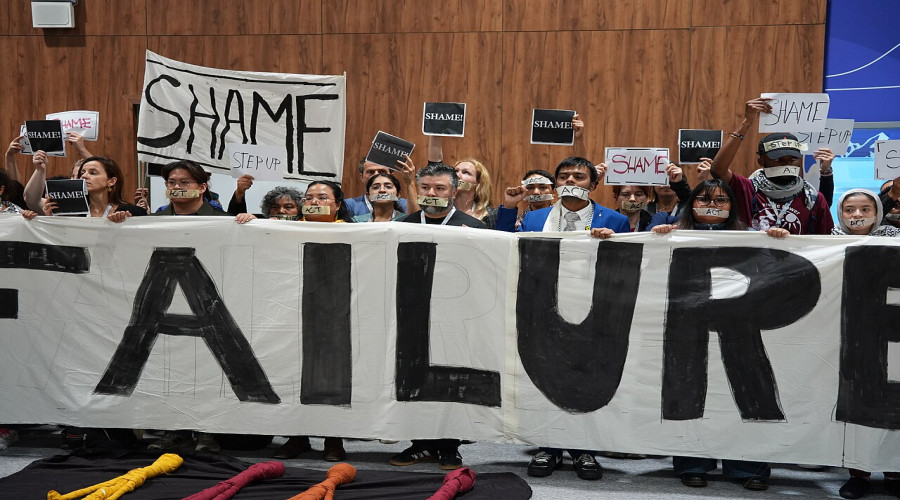
The COP31 climate summit in Antalya, Turkey, ended on Sunday, 22 November, without its main political agreement after countries could not bridge deep divisions over fossil fuels and money.
The talks were due to finish on Friday but ran into Sunday, making this the longest UN climate conference on record, the BBC reported. AFP, in the Daily Star, said the gavel came down more than 49 hours after the scheduled end. The BBC said the last time a COP's main political deal collapsed like this was in Copenhagen in 2009.
Delegates were handed a new draft early on Sunday, but it did not use the words "fossil fuels" anywhere. Its only indirect reference was to the COP28 decision of 2023 to "transition away" from fossil fuels in energy systems. The European Union, Panama, Vanuatu and the Marshall Islands were among those who objected. Ireland's climate minister Darragh O'Brien, speaking for the EU, said it was "unconscionable that we would have a climate pact that makes no mention of fossil fuels."
An earlier draft had mentioned fossil fuels six times, but oil-producing countries refused it. Saudi Arabia's negotiator Mohammad Ayoub said Arab states had engaged in good faith and pointed to their small share of historical emissions. Russia warned against "slogans" on coal, oil and gas, arguing that moving away too fast would cause "fuel poverty".
Money was the second sticking point. Poorer countries objected that the text contained no concrete financial commitments for adapting to climate impacts. COP30 in Brazil last year agreed to triple adaptation finance, but this year's text gave no figures or baseline, the BBC said. AFP reported that a $120 billion target pushed by developing nations dropped out of the failed deal.
COP31 negotiations chief Chris Bowen, Australia's climate minister, said the talks hit "unbridgeable red lines" in "the most complicated and fraught geopolitical environment in living memory". Turkey hosted the summit in Antalya while Australia led the official negotiations. UN Secretary-General Antonio Guterres, attending his last COP before stepping down, said he was "deeply disappointed" and accused "powerful fossil fuel interests" of blocking action. UN climate chief Simon Stiell told the BBC the process "fell short" and that he would seek advice on possible reform of the consensus system.
Some smaller outcomes survived. The BBC reported progress on a "just transition mechanism" to support workers and communities as economies move to clean energy, and said the COP31 president reported that more than 80 countries backed a target to raise electricity's share of global energy use to 35 percent by 2035. AFP, however, reported that the electrification goal fell along with the rest of the pact.
The BBC noted that, on current government policies, the UN expects the world to warm by about 2.8C by 2100, and that the Paris Agreement's 1.5C limit is likely to be overshot in the next few years. The next conference, COP32, is scheduled for November 2027 in Ethiopia.
Source: BBC News, The Daily Star (AFP), Al Jazeera
Image: Protesters at the COP31 climate summit in Antalya, Turkey. Photo: Xuthoria via Wikimedia Commons, CC BY-SA 4.0 (https://creativecommons.org/licenses/by-sa/4.0). Source: https://commons.wikimedia.org/wiki/File:COP31_-_Protests_09.jpg