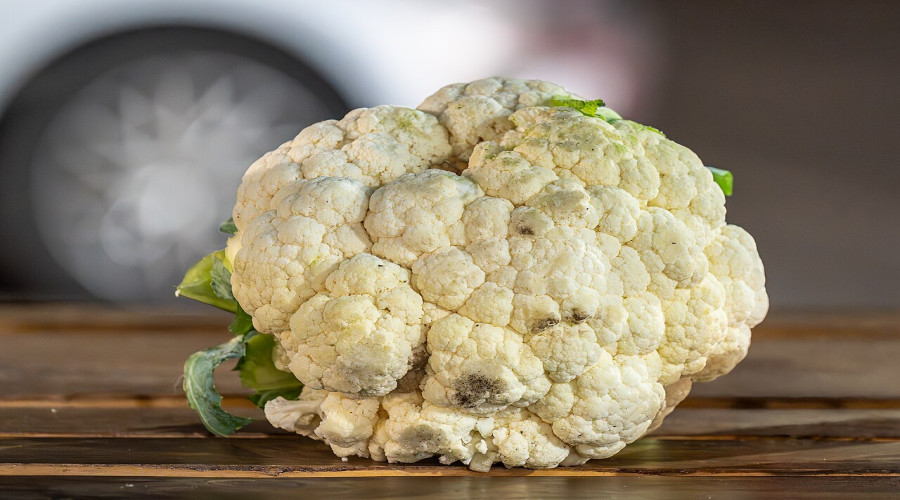
uliflowerAs winter sets in, cauliflower, known in Bangladesh as phulkopi, becomes one of the most common vegetables in markets across the country. It is affordable in season and easy to cook in everyday dishes.
Key nutrients per 100 g
According to the US Department of Agriculture's FoodData Central (SR Legacy entry "Cauliflower, raw", FDC ID 169986), 100 g of raw cauliflower contains:
Energy: 25 kcal
Water: 92.07 g
Protein: 1.92 g
Total fat: 0.28 g
Carbohydrate: 4.97 g
Dietary fibre: 2.0 g
Vitamin C: 48.2 mg
Vitamin K: 15.5 µg
Folate: 57 µg
Vitamin B6: 0.184 mg
Pantothenic acid: 0.667 mg
Choline: 44.3 mg
Potassium: 299 mg
Phosphorus: 44 mg
Calcium: 22 mg
Magnesium: 15 mg
Iron: 0.42 mg
Sodium: 30 mg
What the evidence says
Vitamin C is the standout nutrient. The US National Institutes of Health (NIH) Office of Dietary Supplements notes that the body needs vitamin C to make collagen, which is required for wound healing, and that it helps the body absorb iron from plant foods. It also acts as an antioxidant. The NIH recommends 90 mg of vitamin C a day for adult men and 75 mg for adult women, so a 100 g portion of raw cauliflower supplies more than half of that amount.
Cauliflower is also low in energy and provides fibre, folate and potassium, which makes it a useful part of a balanced diet. The World Health Organization advises that everyone older than 10 should aim for at least 400 g of fruit and vegetables a day as part of a healthy diet.
Cauliflower belongs to the cruciferous family, along with cabbage, broccoli and radish. Harvard T.H. Chan School of Public Health notes that diets rich in vegetables and fruits are linked to a lower risk of heart disease and stroke, and that cruciferous vegetables were among those making important contributions in large long-term studies. The US National Cancer Institute says cruciferous vegetables contain sulphur compounds called glucosinolates that have shown anti-cancer effects in laboratory and animal studies, but that results in humans have been mixed. In other words, cauliflower is a healthy food, not a treatment or guaranteed protection against any disease.
Simple ways to eat it
Cauliflower can be added to a potato and pea torkari, cooked as a dry bhaji with turmeric and cumin, mixed into khichuri, added to soups, or lightly steamed as a side dish. The NIH notes that the vitamin C content of food can be reduced by prolonged storage and cooking, and that steaming or microwaving may lessen these losses, so shorter cooking times are better than long boiling. Wash florets well in clean water before cooking.
Cautions
Some people notice gas or bloating after eating cruciferous vegetables, particularly in large amounts; Mayo Clinic advises increasing fibre in the diet gradually to limit gas and bloating. Cauliflower contains vitamin K, and the NIH advises people taking the blood thinner warfarin to keep their vitamin K intake fairly consistent and to talk to their doctor before making big changes to their diet. Deep-fried preparations such as cauliflower pakora add a lot of oil, so they are best enjoyed occasionally.
This article is for general information only and is not medical advice.
Sources: USDA FoodData Central (Cauliflower, raw, FDC ID 169986); NIH Office of Dietary Supplements (Vitamin C and Vitamin K fact sheets); Harvard T.H. Chan School of Public Health, The Nutrition Source; US National Cancer Institute, Cruciferous Vegetables and Cancer Prevention; World Health Organization, Healthy diet fact sheet; Mayo Clinic, Dietary fiber: Essential for a healthy diet.
Cauliflower (Brassica oleracea var. botrytis). Photo: Rjcastillo via Wikimedia Commons, CC BY-SA 4.0 (https://creativecommons.org/licenses/by-sa/4.0). Source: https://commons.wikimedia.org/wiki/File:Brassica_oleracea_var._botrytis_(Coliflor).jpg