Arnica montana is one of the best-known remedies in homeopathy, often associated with knocks, falls and the aches that follow hard physical work. But what does the classical literature say about it, and what does the scientific evidence show?
Source and preparation
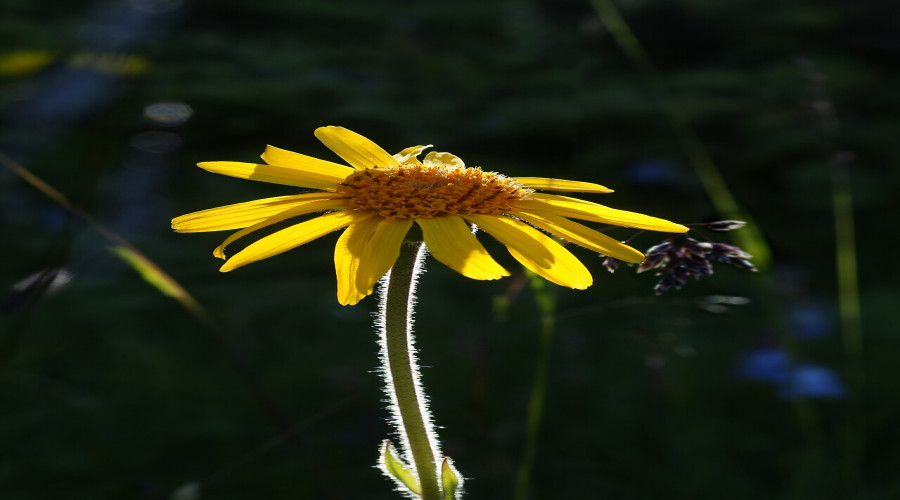
Arnica montana, known in older English texts as leopard's bane or wolf's bane, is a yellow-flowered plant of the daisy family that grows in mountain meadows in Europe. The US National Center for Complementary and Integrative Health (NCCIH) names arnica among the plants from which homeopathic products are made.
As with other homeopathic remedies, a plant extract, or mother tincture, is repeatedly diluted and shaken in steps. Many of the potencies sold are so dilute that, as NCCIH notes, the original substance can become unmeasurable. William Boericke's Homoeopathic Materia Medica, a classic reference first published in the early twentieth century, gives the usual range as the third to the thirtieth potency. It also mentions the tincture for local use on unbroken skin, but warns that it should never be applied hot or where there are abrasions or cuts.
What the materia medica traditionally lists
Arnica is traditionally used in homeopathy for conditions that resemble the effects of injury. Boericke describes it as producing states "quite similar to those resulting from injuries, falls, blows, contusions", and lists it after traumatic injuries, overuse of any organ and strains. The keynote is a "sore, lame, bruised feeling". The entry describes limbs and body that ache "as if beaten", joints that feel as if sprained, soreness after overexertion and black-and-blue bruising. It also notes the person may feel that the bed is too hard. Symptoms are said to be worse from the least touch, from motion and in damp cold, and better from lying down.
Boericke also lists arnica for hoarseness from overuse of the voice and for soreness of the gums after a tooth is pulled. Homeopaths choose remedies by matching a person's whole symptom picture rather than a disease name. These are traditional listings from homeopathic texts, not proven medical effects.
What scientific reviews say
Major reviews have not found reliable evidence that homeopathy works better than placebo. In 2015, Australia's National Health and Medical Research Council (NHMRC) concluded after a broad assessment that there are no health conditions for which there is reliable evidence that homeopathy is effective. NCCIH states that there is little evidence to support homeopathy as an effective treatment for any specific health condition.
Safety
Undiluted arnica is not harmless. MedlinePlus, from the US National Library of Medicine, says arnica can be poisonous in larger amounts and can be unsafe when taken by mouth unless it is used in homeopathic dilutions. NCCIH warns that some products labelled as homeopathic may contain substantial amounts of active ingredients and could cause side effects and drug interactions, so buy only from registered sources. A serious injury, such as a suspected fracture, a head injury, severe swelling or pain that does not improve, needs prompt medical assessment. No remedy should delay that care.
This article is for general information only. Consult a registered physician before taking any medicine.
Sources: Boericke, Homoeopathic Materia Medica (Arnica montana); MedlinePlus, Arnica; NCCIH, Homeopathy: What You Need To Know; NHMRC Statement on Homeopathy (2015).
Image: Arnica montana in flower at Moosalp, Switzerland, the plant used to make the homeopathic remedy. Photo: Hans Hillewaert via Wikimedia Commons, CC BY-SA 3.0 (https://creativecommons.org/licenses/by-sa/3.0). Source: https://commons.wikimedia.org/wiki/File:Arnica_montana_(flower).jpg