A federal jury in Brooklyn, New York, on Tuesday (24 November) found Chinese telecommunications company Huawei guilty of conspiring to steal trade secrets and of bank fraud. The jury acquitted it of the most serious charge in the case, a racketeering conspiracy.
Huawei and three of its affiliates faced 12 counts in total, including racketeering conspiracy, bank fraud, wire fraud, sanctions violations, trade secrets conspiracy and obstruction of justice. Jurors convicted Huawei on 10 of the 12 counts, including conspiracy to violate US sanctions, the BBC reported. They declined to convict on the racketeering charge, which required them to find that the company had acted like a criminal enterprise.
The trial lasted more than two months. Prosecutors called more than 60 witnesses and the defence called 15, Al Jazeera reported. Prosecutors argued that Huawei had spent two decades lying to banks about its business in Iran and taking technology from rival companies. During the trial, prosecutors sought to show that Huawei took router source code from Cisco Systems and antenna technology from Quintel, and that it hired a professor to gain access to a circuit board developed by CNEX.
"For decades, Huawei and three of its subsidiaries conducted their business in the United States on the basis of lies and theft," US Attorney General Todd Blanche said in a statement.
Huawei's lawyers argued that investigators had built a false story of a grand conspiracy out of isolated wrongdoing by a few of the company's more than 200,000 employees. In a statement, Huawei said the acquittal on racketeering "confirms that these allegations lack factual basis". Defence lawyer Brian Heberlig told the BBC the company had "mixed emotions" about the rest of the verdict and that he fully expected it to appeal. Sentencing is planned for September 2027.
The case dates back to the arrest in Canada in December 2018 of Meng Wanzhou, Huawei's chief financial officer and the daughter of its founder. She was wanted on a US warrant over allegations that she misled HSBC about Huawei's business in Iran. After nearly three years she reached a deferred prosecution agreement and returned to China, and the charges against her were dropped. Prosecutors added the trade secrets charges in 2020.
It is not clear how the verdict will affect Huawei's business. The company has long been barred from selling equipment to US carriers on security grounds, and several Western countries, including Canada and the United Kingdom, have also restricted it. Experts cited by Al Jazeera said the case has not undermined its business.
Source: BBC News, Al Jazeera
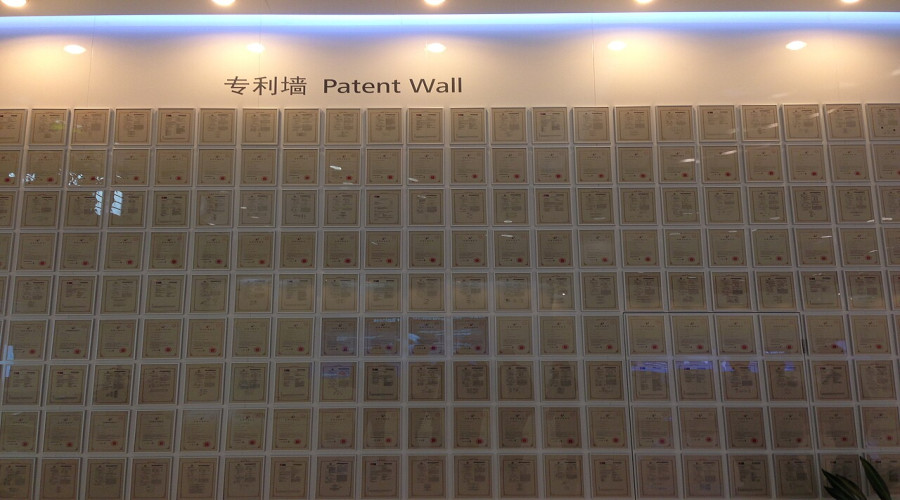
Image: File photo: a patent wall at Huawei's headquarters in Shenzhen, China. Photo: RG72 via Wikimedia Commons, CC BY-SA 4.0 (https://creativecommons.org/licenses/by-sa/4.0). Source: https://commons.wikimedia.org/wiki/File:Sidejo_de_Huawei_en_%C5%9Cen%C4%B5eno_05.jpg