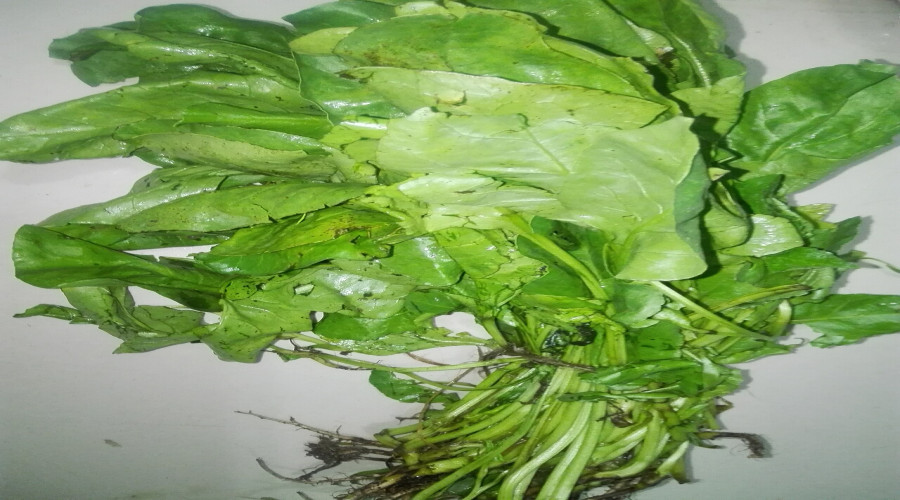
Spinach, or palong shak, is one of the leafy greens that fill Bangladeshi markets in the cool months. Families cook it as bhaji, add it to dal and fish curries, or mash it into bhorta.
Key nutrients per 100 g
According to the US Department of Agriculture's FoodData Central (SR Legacy entry "Spinach, raw", FDC ID 168462), 100 g of raw spinach contains:
Energy: 23 kcal
Water: 91.4 g
Protein: 2.86 g
Total fat: 0.39 g
Carbohydrate: 3.63 g
Dietary fibre: 2.2 g
Vitamin K: 482.9 µg
Vitamin A (RAE): 469 µg
Beta-carotene: 5,626 µg
Lutein + zeaxanthin: 12,198 µg
Folate: 194 µg
Vitamin C: 28.1 mg
Vitamin E: 2.03 mg
Potassium: 558 mg
Calcium: 99 mg
Magnesium: 79 mg
Iron: 2.71 mg
Sodium: 79 mg
What the evidence says
Its standout nutrient is vitamin K, which the US National Institutes of Health (NIH) Office of Dietary Supplements says the body needs for blood clotting and healthy bones. The NIH recommends 120 µg a day for adult men and 90 µg for adult women. By our calculation from the USDA and NIH figures, 100 g of raw spinach provides several times that amount.
Spinach is also a good source of folate, a B vitamin the body needs to make DNA and for cells to divide. Adults need 400 µg DFE a day, according to the NIH, so 100 g of raw spinach supplies close to half of that.
The NIH also lists spinach among plant sources of iron, which the body uses to make haemoglobin, the protein in red blood cells that carries oxygen. Iron from plants (non-haem iron) is absorbed less well than iron from meat and fish. The NIH says absorption improves when plant foods are eaten together with meat, fish or foods containing vitamin C, such as citrus fruits and tomatoes. A squeeze of lemon over cooked shak helps.
More generally, Harvard T.H. Chan School of Public Health's Nutrition Source says that diets rich in vegetables and fruits can lower blood pressure and reduce the risk of heart disease and stroke. The World Health Organization (WHO) recommends eating at least 400 g, or five portions, of fruit and vegetables a day. No single vegetable prevents or cures disease; the benefits come from a varied, balanced diet.
Ways to eat it
Stir-fry chopped spinach with garlic, onion and a little mustard oil as palong shak bhaji. Add it to masoor dal near the end of cooking, cook it with small fish or potatoes, or blanch and mash it with green chilli for bhorta. Young leaves can be added raw to salads.
Cautions
Wash spinach thoroughly in several changes of clean water, as soil collects in the leaves and stems. People who take the blood thinner warfarin should not suddenly change how much vitamin K they eat, the NIH advises, because a sudden change can affect how the medicine works; they should keep their intake of leafy greens steady and follow their doctor's advice. Spinach is high in oxalate. The US National Institute of Diabetes and Digestive and Kidney Diseases (NIDDK) says people who have had calcium oxalate kidney stones may want to avoid it and should ask a health professional about oxalate in their diet. People on a potassium-restricted diet should follow their doctor's advice.
For general information only; this is not medical advice.
Sources: USDA FoodData Central (Spinach, raw, FDC 168462); NIH Office of Dietary Supplements fact sheets on Vitamin K, Folate and Iron; NIDDK, Eating, Diet and Nutrition for Kidney Stones; Harvard T.H. Chan School of Public Health, The Nutrition Source: Vegetables and Fruits; WHO, Healthy diet fact sheet.
Image: Winter spinach from Bangladesh. Photo: Ferdous via Wikimedia Commons, CC BY-SA 4.0 (https://creativecommons.org/licenses/by-sa/4.0). Source: https://commons.wikimedia.org/wiki/File:Spinach_3.jpg