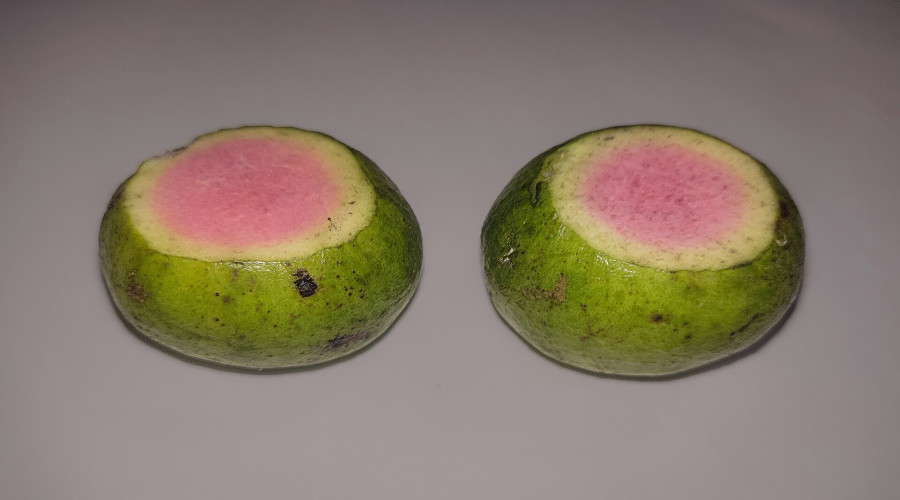
Guava, known in Bangladesh as peyara, is a familiar market fruit as the weather turns cooler. Trees can bear fruit at more than one time of year. Research at the Bangladesh Agricultural Research Institute in Gazipur has recorded substantial harvests in the June–August and September–November periods, among other seasons, while fruit is also sold in the drier winter months.
According to the US Department of Agriculture's FoodData Central (SR Legacy, FDC ID 173044, "Guavas, common, raw"), 100 grams of raw common guava provides about 68 calories, 80.8 grams of water, 2.55 grams of protein, 0.95 grams of fat, 14.3 grams of carbohydrate, 8.92 grams of total sugars and 5.4 grams of dietary fibre. The same 100-gram portion contains about 228 milligrams of vitamin C, 417 milligrams of potassium, 18 milligrams of calcium, 0.26 milligrams of iron, 22 milligrams of magnesium, 40 milligrams of phosphorus and 49 micrograms of folate.
The US National Institutes of Health Office of Dietary Supplements says adults need 90 milligrams of vitamin C a day for men and 75 milligrams for women (more during pregnancy or breastfeeding, and an extra 35 milligrams for people who smoke). A 100-gram serving of guava therefore supplies several times the usual adult daily amount. NIH says vitamin C acts as an antioxidant, is needed to make collagen to help wounds heal, improves the absorption of iron from plant foods, and helps the immune system work properly. It also says vitamin C supplements have not been shown to prevent the common cold in most people, though people who take them regularly might have slightly shorter or milder colds. Harvard T.H. Chan School of Public Health likewise notes that vitamin C plays a role in controlling infections and healing wounds, and that fruits and vegetables are the best sources.
The 5.4 grams of fibre in 100 grams of guava can contribute to a high-fibre diet. The Mayo Clinic says fibre, found mainly in plant foods, may help prevent or relieve constipation, and that fibre-rich foods can also support a healthy weight and are linked with a lower risk of diabetes, heart disease and some types of cancer. Harvard's Nutrition Source says fibre helps regulate the body's use of sugars and can help keep hunger and blood sugar in check, and that insoluble fibre helps food move through the digestive system.
Guava is often eaten fresh in Bangladesh, sliced with a little salt or chilli, added to fruit salad or blended into a smoothie. Because vitamin C is reduced by long storage and by high-heat cooking, eating the ripe fruit raw preserves more of that nutrient, NIH notes.
Cautions are in order. A sudden large increase in fibre can cause bloating or stomach discomfort, so it is sensible to increase fibre gradually and drink enough water, as dietitians generally advise for fibre-rich foods. Guava contains natural sugars. People who have been told to limit potassium, or who have a known fruit allergy, should follow medical advice. Guava is a nutritious food, not a medicine, and it should not be treated as a cure for any disease.
This article is for general information only and is not medical advice. Consult a registered physician or a qualified dietitian for personal dietary advice.
Sources: USDA FoodData Central (FDC ID 173044); NIH Office of Dietary Supplements, Vitamin C fact sheet; Harvard T.H. Chan School of Public Health, The Nutrition Source (Vitamin C and Fiber); Mayo Clinic, Dietary fiber; Bangladesh Agricultural Research Institute pruning dataset (Data in Brief / PMC11286981).
Image: Tanvir Rahat / Wikimedia Commons (CC BY-SA 4.0). Pink guava, Bangladesh.