As winter mornings turn cold and damp, especially in northern Bangladesh, some people notice small, itchy, swollen patches on their toes or fingers a few hours after being out in the chill. These are chilblains, also called perniosis. They are usually harmless and clear up on their own, but they can be painful and may return each cold season.

What causes chilblains?

According to the NHS, cold makes the small blood vessels in the fingers and toes narrow. When the skin is warmed up again, the vessels near the surface widen faster than the deeper vessels can cope with, which causes itching, pain and changes in skin colour. The Mayo Clinic says chilblains are linked to cold, damp air that is not freezing, and that the exact cause is not fully understood.

Risk factors listed by the Mayo Clinic include tight shoes or clothing that leave skin exposed to cold, being underweight, living in cold and humid areas, and certain medical conditions such as Raynaud's phenomenon or connective tissue disease. Chilblains are most common in women aged 15 to 30.

Symptoms

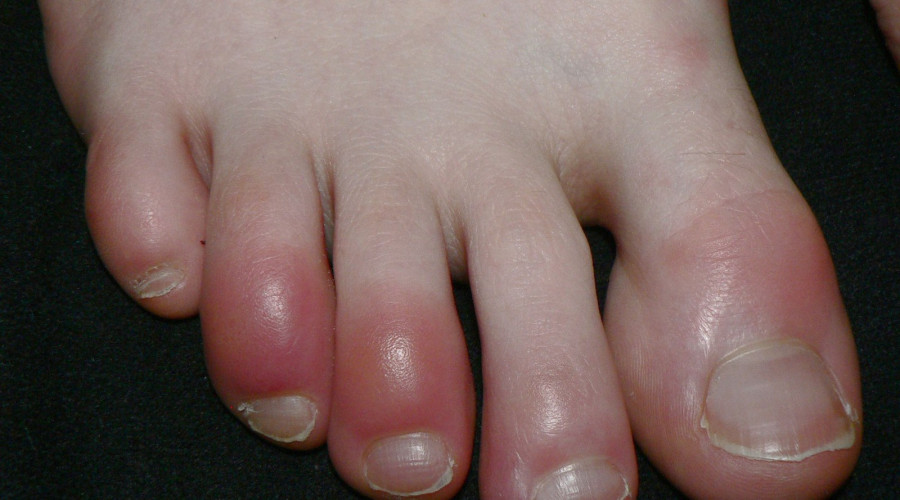
Small itchy or burning patches, usually on the toes or fingers, sometimes on the face or legs.

Red, purple or darker patches of skin (redness can be harder to see on brown skin).

Swelling, pain or stinging, and occasionally blisters or sores.

The NHS says chilblains usually go away within two to three weeks.

Prevention and self-care

Keep hands, feet and face warm and dry; wear gloves, thick socks and warm, waterproof footwear.

Dress in loose layers and avoid tight shoes.

After coming in from the cold, warm the skin slowly. Do not put hands or feet on a heater or under hot water.

Do not scratch or pick at the skin.

Avoid smoking, which affects blood flow; the NHS also advises avoiding caffeine and decongestant medicines when you have chilblains.

A pharmacist can suggest a soothing lotion for itching.

When to see a doctor

See a doctor if the skin is not improving after two to three weeks, if pus comes from the area or you think it is infected, if you have a high temperature or feel hot and shivery, if chilblains keep coming back or last into the warm season, or if you have diabetes, because foot problems can be more serious. Seek medical care if you are unsure whether you have been in freezing conditions, as this could be frostbite.

Traditional homeopathic listings

Homeopathic texts list several remedies for chilblains. In William Boericke's Homoeopathic Materia Medica:

Agaricus muscarius (fly agaric) is listed for "burning, itching, redness, and swelling, as from frostbites", with chilblains and itching of the toes and feet "as if frozen".

Petroleum is listed for chilblains that are "moist, itch and burn", and for dry, rough, cracked skin that is worse in winter.

Tamus is also mentioned by Boericke in connection with chilblains.

These are traditional descriptions, not proven effects. Australia's National Health and Medical Research Council concluded in 2015 that there is no reliable evidence that homeopathy is effective for any health condition, and the US National Center for Complementary and Integrative Health says there is little evidence to support it for any specific condition. Do not delay seeing a doctor for the warning signs above, and do not stop any prescribed treatment.

This article is for general information only. Consult a registered physician before taking any medicine.

Sources: NHS, Chilblains; Mayo Clinic, Chilblains: symptoms and causes; Boericke, Homoeopathic Materia Medica (Agaricus muscarius, Petroleum); NCCIH, Homeopathy: What You Need To Know; NHMRC Statement on Homeopathy (2015).

Image: Chilblains (perniosis) on the toes, showing typical red, swollen patches. Photo: Sapp via Wikimedia Commons, Public domain. Source: https://commons.wikimedia.org/?curid=3297622