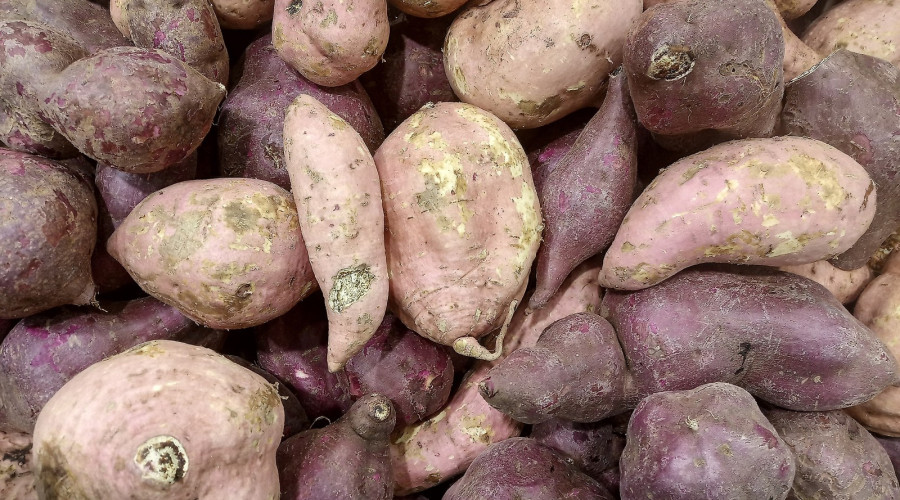
Sweet potato, known in Bangladesh as mishti alu, is one of the most familiar winter crops in local markets. Its sweet, orange or pale flesh is roasted on village fires, boiled for breakfast or cooked into curries. Despite its name, it is not closely related to the ordinary potato; it is the root of a plant in the morning glory family, Ipomoea batatas.

Key nutrients per 100 g (raw)

According to USDA FoodData Central (Sweet potato, raw, unprepared, FDC 168482), 100 g of sweet potato provides about:

Energy: 86 kcal. Water: 77 g. Carbohydrate: 20.1 g. Dietary fibre: 3.0 g. Protein: 1.6 g. Fat: 0.05 g.

Vitamins and minerals: vitamin A 709 micrograms RAE (from about 8,500 micrograms of beta-carotene); potassium 337 mg; manganese 0.26 mg; vitamin B6 0.21 mg; vitamin C 2.4 mg; magnesium 25 mg; calcium 30 mg; iron 0.6 mg.

Values vary by variety. Orange-fleshed sweet potatoes are much richer in beta-carotene than white or pale yellow types.

Possible health benefits

A rich source of vitamin A. The beta-carotene that gives orange sweet potato its colour is converted by the body into vitamin A. The US National Institutes of Health (NIH) Office of Dietary Supplements notes that vitamin A is important for normal vision, the immune system and the healthy growth of cells. A 100 g serving of orange sweet potato supplies a large share of an adult's daily vitamin A needs.

Fibre for digestion. With around 3 g of fibre per 100 g, sweet potato contributes to the fibre intake that the World Health Organization links with a healthy diet, which supports regular bowel movements and helps people feel full.

Potassium for healthy blood pressure. The NIH says diets rich in potassium, especially when combined with less salt, are associated with healthier blood pressure. Sweet potato is one of many vegetables that add potassium to meals.

Antioxidants. Carotenoids and, in purple varieties, anthocyanins are natural pigments with antioxidant activity. Research on their effects in people is still developing, so they are best seen as part of an overall pattern of eating plenty of vegetables and fruit.

Ways to eat it

Boil or steam with the skin on, then peel, to keep more nutrients.

Roast or bake and eat as a warm winter snack.

Add cubes to dal, mixed vegetable curry or khichuri.

Mash with a little lemon juice, chilli and coriander as a bhorta.

Cooking with a small amount of oil helps the body absorb beta-carotene.

Cautions

Sweet potato is starchy, so people with diabetes should watch portion sizes and preferably eat it boiled rather than fried or sweetened. Very large amounts of beta-carotene-rich foods can turn the skin slightly yellow-orange; the NIH describes this as harmless and reversible. Sweet potatoes contain some oxalate, so people who have been advised to limit oxalate because of kidney stones should ask their doctor about suitable amounts. People with advanced kidney disease who are told to restrict potassium should also follow their doctor's or dietitian's advice. Wash the roots well and avoid any that are mouldy or badly damaged.

Sweet potato is a nutritious, affordable vegetable, but no single food prevents or cures disease. It works best as part of a varied, balanced diet.

This article is for general information and is not medical advice.

Sources: USDA FoodData Central (Sweet potato, raw, unprepared, FDC 168482); NIH Office of Dietary Supplements, Vitamin A and Carotenoids and Potassium fact sheets; WHO, Healthy diet fact sheet.

Image: Sweet potatoes (Ipomoea batatas), known in Bangladesh as mishti alu. Photo: Filo gèn' via Wikimedia Commons, CC BY-SA 4.0 (https://creativecommons.org/licenses/by-sa/4.0). Source: https://commons.wikimedia.org/?curid=87411983