Nux vomica is among the most frequently mentioned remedies in classical homeopathy. Older texts link it with the strains of a busy, sedentary life. But what does the classical literature actually say about it, and what does the scientific evidence show?
Source and preparation
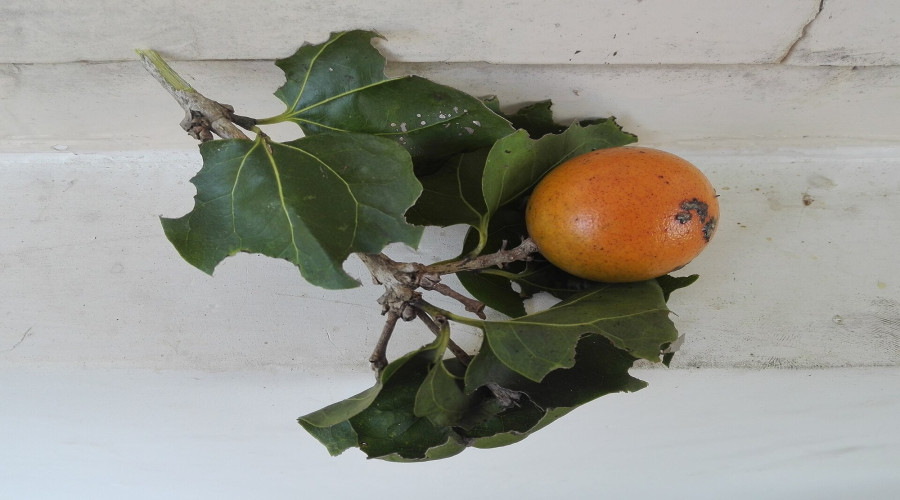
The remedy is prepared from the seeds of Strychnos nux-vomica, a tree native to India and South-East Asia, known in English as the poison-nut or strychnine tree. The seeds sit inside an orange, apple-like fruit. They naturally contain strychnine, a highly poisonous compound, which is why the raw seeds must never be eaten or used as a home remedy.
As with other homeopathic remedies, a starting extract is diluted and shaken repeatedly in steps. The US National Center for Complementary and Integrative Health (NCCIH) notes that many homeopathic products are so dilute that no molecules of the original substance remain. William Boericke's Homoeopathic Materia Medica, a classic reference first published in the early twentieth century, lists potencies "First to thirtieth potency and higher".
What the materia medica traditionally lists
Nux vomica is traditionally used in homeopathy for complaints that the literature links with modern lifestyles. Boericke calls it "the greatest of polychrests", meaning a remedy with a very wide range of uses, and describes the typical patient as thin, quick, active, nervous and irritable, doing much mental work and leading a sedentary life with office work, overstudy and business worries.
The entry lists it especially for digestive upsets, including a sense of weight in the stomach some time after eating, sour or bitter belching, nausea in the morning and constipation with frequent, unsatisfactory urging. It also lists headache with vertigo, particularly in the morning or after mental exertion, coffee or alcohol, and "stuffy colds" that are stuffed up at night and outdoors. The person is described as chilly and very sensitive to noise, smells and light. Symptoms are said to be worse in the morning, after eating and from stimulants, and better after a short sleep and from rest.
Homeopaths choose remedies by matching a person's whole symptom picture rather than a disease name. These are traditional listings from homeopathic texts, not proven medical effects.
What scientific reviews say
Major reviews have not found reliable evidence that homeopathy works better than placebo. In 2015, Australia's National Health and Medical Research Council (NHMRC) concluded that there are no health conditions for which there is reliable evidence that homeopathy is effective. NCCIH says there is little evidence to support homeopathy as an effective treatment for any specific health condition. The NHS notes that complementary therapies are not tested in the same way as standard medicines and advises people not to stop prescribed medicine without first talking to their doctor.
Safety
Because the source plant is toxic, quality matters. NCCIH warns that some products labelled as homeopathic may contain substantial amounts of active ingredients and could cause side effects and drug interactions. Buy only from registered sources, and see a doctor about persistent indigestion, constipation or headaches.
This article is for general information only. Consult a registered physician before taking any medicine.
Sources: Boericke, Homoeopathic Materia Medica (Nux vomica); NCCIH, Homeopathy: What You Need To Know; NHS, Herbal medicines and complementary therapies; NHMRC Statement on Homeopathy (2015).
Image: Fruit of Strychnos nux-vomica, the poison-nut tree whose seeds are used to prepare the homeopathic remedy. Photo: Adityamadhav83 via Wikimedia Commons, CC BY-SA 4.0 (https://creativecommons.org/licenses/by-sa/4.0). Source: https://commons.wikimedia.org/wiki/File:Strychnos_nux-vomica_fruit_specimen_collected_from_Sontyam_near_Visakhapatnam.jpg