Bangladesh is among 14 trading partners facing new tariffs proposed by the United States on Wednesday (25 November), following a months-long investigation into what Washington calls excess manufacturing capacity in other economies.
The Office of the United States Trade Representative (USTR) announced the proposed duties together with reports on each economy's trade practices, the BBC reported. Besides Bangladesh, the list covers China, the European Union, India, Cambodia, Indonesia, Japan, South Korea, Malaysia, Singapore, Switzerland, Taiwan, Thailand and Vietnam.
The duties are not final. They must go through public consultation and possibly hearings, and are not expected to take effect before next year, with January 2027 the earliest date mentioned, according to the BBC and the Dhaka Tribune. The rate that would apply to Bangladesh was not immediately clear, the Dhaka Tribune reported. Rates differ from one economy to another, and the BBC said China faces the highest.
A senior US official said the proposals would take into account existing trade agreements, offering some relief to countries that have already negotiated tariff arrangements. The official also said the new duties would not be added on top of tariffs introduced in July over alleged failures to address forced labour; where both apply, the higher rate would be used. Bangladesh was among the countries given a 10 percent tariff under the July measures, with some product exemptions, the Dhaka Tribune reported.
US Trade Representative Jamieson Greer said the tariffs would "level the playing field for American workers", accusing many trading partners of industrial strategies that tilt trade in their favour. The investigation began in March, after the US Supreme Court struck down an earlier set of sweeping global tariffs.
Several economists were cautious about the impact. Stephen Brown of Capital Economics said the announcement was "not as alarming as it looks", because the new duties largely replace tariffs announced in the summer and cover a limited range of goods, the BBC reported. Economists have also warned that tariffs can push up prices for consumers.
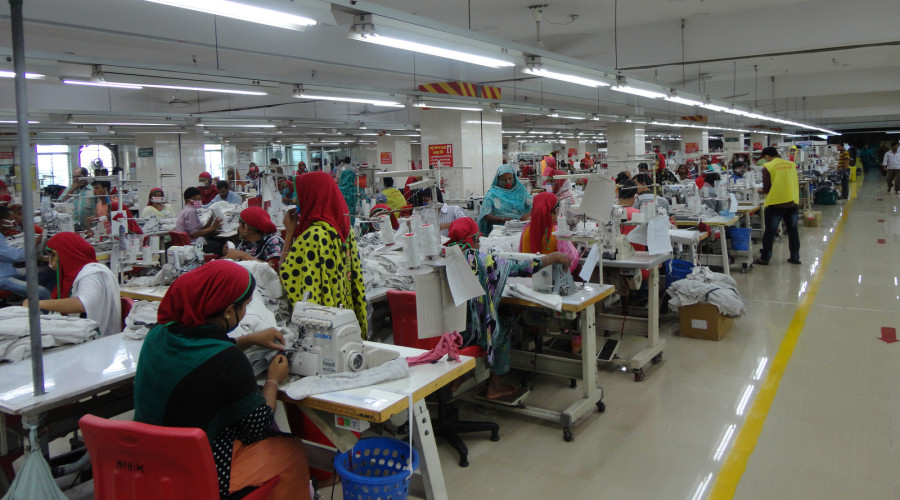
For Bangladesh, which relies heavily on garment exports to the United States, the main questions are the final rate, the scope of product exemptions and how its position compares with competitors. China, Vietnam, India, Cambodia and Indonesia, all major garment producers, are also on the list. The full picture will become clearer once Washington publishes country-specific tariff schedules after the consultation.
Source: Dhaka Tribune, BBC
Image: File photo: garment workers on a factory floor in Bangladesh. Photo: Fahad Faisal via Wikimedia Commons, CC BY-SA 4.0 (https://creativecommons.org/licenses/by-sa/4.0). Source: https://commons.wikimedia.org/wiki/File:Working_conditions_of_Garment_workers_in_Bangladesh.jpg