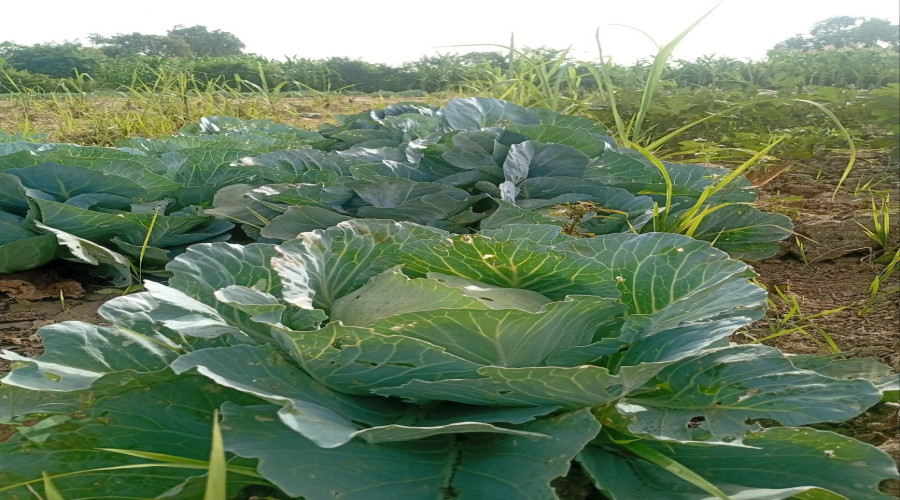
Cabbage, or bandhakopi, is one of the vegetables that arrive in large quantities in Bangladeshi markets as winter sets in. Its tightly packed green leaves are cooked into bhaji and ghonto, added to fish and meat curries, and shredded into salads.
Key nutrients per 100 g
According to the US Department of Agriculture's FoodData Central (SR Legacy entry "Cabbage, raw", FDC ID 169975), 100 g of raw cabbage contains:
Energy: 25 kcal
Water: 92.2 g
Protein: 1.28 g
Total fat: 0.1 g
Carbohydrate: 5.8 g
Dietary fibre: 2.5 g
Total sugars: 3.2 g
Vitamin C: 36.6 mg
Vitamin K: 76 µg
Folate: 43 µg
Vitamin B6: 0.124 mg
Potassium: 170 mg
Calcium: 40 mg
Magnesium: 12 mg
Iron: 0.47 mg
Sodium: 18 mg
What the evidence says
Cabbage is low in calories and mostly water, which makes it a filling, light addition to meals. Its most notable nutrient is vitamin C. The US National Institutes of Health (NIH) Office of Dietary Supplements says the body needs vitamin C to make collagen, a protein that helps wounds heal, and that it acts as an antioxidant, improves the absorption of iron from plant foods and helps the immune system work properly. Adult men need 90 mg a day and adult women 75 mg, according to the NIH. By our calculation from the USDA and NIH figures, 100 g of raw cabbage provides about 40 to 50 percent of that amount. The NIH notes that long storage and cooking reduce vitamin C, and that steaming or microwaving may lessen the losses.
Cabbage also provides vitamin K, which the NIH says the body needs for blood clotting and healthy bones, along with folate and fibre.
Cabbage belongs to the cruciferous family, along with cauliflower, broccoli and mustard greens. The US National Cancer Institute says these vegetables contain sulphur-containing compounds called glucosinolates, which have been studied for possible anti-cancer effects, but that studies in humans have shown mixed results. More broadly, Harvard T.H. Chan School of Public Health's Nutrition Source says diets rich in vegetables and fruits can lower blood pressure and reduce the risk of heart disease and stroke. The World Health Organization (WHO) recommends at least 400 g of fruit and vegetables a day. No single vegetable prevents or cures disease.
Ways to eat it
Shred raw cabbage with carrot, cucumber and a squeeze of lemon for a crunchy salad. Stir-fry it lightly with onion, green chilli and turmeric as bandhakopi bhaji, cook it with peas and potatoes, or add it to rui or koi fish curry. Cooking it briefly helps keep more of its vitamin C.
Cautions
Remove the outer leaves and wash cabbage well in clean water before use. People who take the blood thinner warfarin should not suddenly change how much vitamin K they eat, the NIH advises, and should keep their intake of green vegetables steady and follow their doctor's advice. Anyone on a special diet for a medical condition should ask a health professional.
For general information only; this is not medical advice.
Sources: USDA FoodData Central (Cabbage, raw, FDC 169975); NIH Office of Dietary Supplements fact sheets on Vitamin C and Vitamin K; US National Cancer Institute, Cruciferous Vegetables and Cancer Prevention; Harvard T.H. Chan School of Public Health, The Nutrition Source: Vegetables and Fruits; WHO, Healthy diet fact sheet.
Image: A mature cabbage ready for harvest. Photo: Sirjat via Wikimedia Commons, CC0 (http://creativecommons.org/publicdomain/zero/1.0/deed.en). Source: https://commons.wikimedia.org/wiki/File:Cabbage_to_be_harvested.jpg