Conservationists, scientists and forest officials from across Asia and beyond gathered in Sundarbans on Wednesday (25 November) for a two-day meeting aimed at saving the region's critically endangered vultures, with the talks being held aboard a tourist vessel on the Pashur River near Koromjol.
The event is the annual meeting of partners in Saving Asia's Vultures from Extinction (SAVE), a regional conservation coalition. The Bangladesh Forest Department is hosting it with IUCN Bangladesh, BirdLife International, the Royal Society for the Protection of Birds (RSPB) and other organisations, according to the state news agency BSS. More than 45 participants are taking part. BSS put the number of countries represented at nine, while The Daily Observer reported 10.
Chief Conservator of Forests Md Amir Hosain Chowdhury, who attended the opening session as chief guest, said Bangladesh had taken a series of landmark steps for vulture conservation. He pointed to the ban on the veterinary painkiller diclofenac in 2010, the declaration of two Vulture Safe Zones in 2014 and a ban on veterinary use of ketoprofen in 2021, which BSS reported made Bangladesh the first country in Asia to take that step. Both drugs are harmful to vultures that feed on the carcasses of treated cattle.
He also highlighted supplementary feeding, population monitoring, satellite tracking, and rescue and rehabilitation work under the National Vulture Conservation Action Plan. According to The Daily Observer, he said about 248 vultures remain in Sundarbans, compared with roughly 50,000 four decades ago.
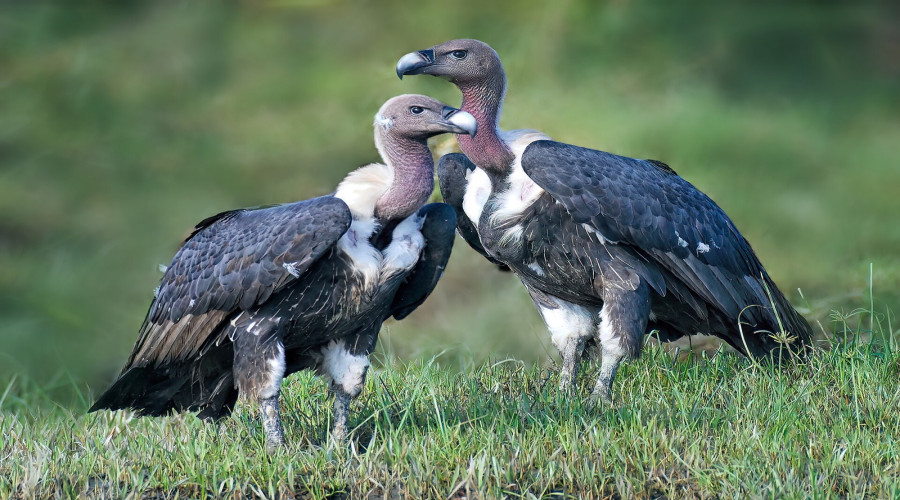
The choice of venue was significant, he said, because the mangrove forest holds one of the country's two remaining breeding colonies of the White-rumped Vulture (Gyps bengalensis) and lies at the heart of the second Vulture Safe Zone. SAVE chair Jemima Parry-Jones presided over the opening session, and Khulna's divisional forest conservator Imran Ahmed gave the welcome address.
Over the two days, delegates are reviewing progress across Asia and discussing veterinary drug safety, poisoning prevention, population recovery and cross-border cooperation. Speakers said regional cooperation is vital because vultures regularly fly across national borders.
According to IUCN figures cited by BSS and The Business Standard, Bangladesh's population of resident White-rumped Vultures has stabilised at a critically low level of about 245 to 260 birds, after a decline of around 99.9 percent across South Asia. Drug bans and safe zones have halted the steep fall, but the surviving birds remain fragile and depend on continued protection.
Source: BSS, The Daily Observer, The Business Standard
Image: A white-rumped vulture photographed in Sundarbans, Bangladesh. Photo: Mahmudul Bari via Wikimedia Commons, CC BY-SA 4.0 (https://creativecommons.org/licenses/by-sa/4.0). Source: https://commons.wikimedia.org/wiki/File:White-rumped_vulture_Sunderbans_Bangladesh.jpg